THE FORTNIGHTLY CLUB OF REDLANDS, CALIFORNIA - Founded 24 January 1895 |
||
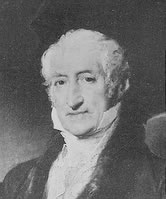
by, Halcott Green Grant Assembly Room, A. K. Smiley Public Library I am fortunate enough to have access to a remarkable journal by Ward Nicholas Boylston, my 4 times great grandfather, via my mother’s family, who was a most interesting guy. He was born Ward Hallowell in Boston in 1744 of a staunch Tory family. His mother was the sister of Nicholas Boylston, one of the most successful and rich merchants in Boston in the pre revolutionary years. Nicholas was a bachelor, and as such he chose his young nephew Ward Hallowell to become his heir if he changed his name to Ward Nicholas Boylston. I don’t think it took long for Ward to make up his mind, and he became a Boylston by Royal Decree signed by no less than King George the Third himself! Nicholas died in 1770, and left him a chunk of his fortune. The following year Ward fell in love with Ann, the daughter of William Molineux, a radical patriot characterized by the Tories as ”the chief leader in Dirty matters.” This, of course, was politically unacceptable to the Tory Boylston / Hallowell families so the young couple eloped and were married on board His Majesty’s ship Salisburyin Portsmouth, NH. Ann gave birth to their son, Ward Nicholas II the following year. It turns out that the marriage was unhappy, perhaps because of the strong political feelings of the times. Ann’s father was becoming more and more involved in the resistance to the policies of the British. He was a member of the Committee of Correspondence and a speaker at the Old South Meeting House on the day that tea was thrown into the harbor. He and Dr. Thomas Young were the only two patriots who openly, without disguise, helped throw the tea overboard. Feelings must have been high! In 1776 most of the Hallowells and Boylstons, finding things getting too hot for them in Boston, left for Halifax and ultimately London. Ann’s child, Nicholas, was taken to London in the care of the Hallowells, and later, Ann went to London as well but died on the way back to Boston in 1779 leaving little Nicholas to be brought up by her in-laws. In the meantime, in October of 1773, Ward, because of some sort of “ill health,” embarked on a trip to Italy without his bride for a cure. It couldn’t have been too debilitating because, according to his journal, which is in the possession of the Massachusetts Historical Society, he started a tour which was to last for almost 2 years and his absence from Boston - 27. His journal and correspondence was studied and deciphered by John W. Taylor, Editor of Publications for the Colonial Society of Massachusetts who wrote an unpublished paper and to whom I am indebted for much of the information in this paper. Boylston’s trip from Boston to St Johns, Newfoundland took 21 most difficult days, and thence to Naples, Italy, in only 26 more, helped by favorable following winds. He had nothing good to say about his brief stay in St. Johns, the climate “cold and uncomfortable and the buildings in general ill contrived, the most disagreeable place I have ever lived in” he wrote. The Mediterranean Sea and Naples, however, were warm and inviting. His adventure ashore was delayed 5 days due to quarantine regulations and he arrived on January 22. After visiting his banker and attending the opera at the San Carlo opera house, he settled in at comfortable quarters and started doing what all tourists do. According to his journal, he visited the volcanic crater of Sallatara which tarnished his shoe buckles a “dark copper cast”, various Roman ruins and other historic sites which were on the Grand Tour of the time. While in Naples, as was the custom in those days, the local English society included him, as a traveling Englishman in their various activities. The British ambassador, Sir William Hamilton, entertained him several times in his official residence, the Palazzo Sesso, and he went to a masquerade ball at the opera house and various other elegant affairs. During his visit to Naples in mid February came the news of the Boston Tea Party from his correspondents in London who warned that “these acts.. will cause some violent measures to be taken by Government here.” Boylston’s correspondence shows his reaction to be more positive. He favored ”spirited and decisive measures” to be taken to bring the patriots “to obedience,” hoping “such acts of outrage will surely never be passed over unnoticed.” He also expressed concern for the safety of his friends and family in Boston, but realized there was little he could do, so he continued his excursions. He was an Anglican and as such found some of the Catholic rituals and miracles to be hard to believe. The churches he found to be “grand” and “elegant,” however, and he had great admiration for the frescos and paintings. He couldn’t understand the local custom of the Cocagna during the four Sundays preceding lent. Several platforms were built throughout the city and they were festooned with quarters of beef, mutton, veal and hogs, plus different types of salted fish and fowl, the latter nailed to the edifice alive, which he deplored. Soldiers guarded the displays until cannons were fired, whereupon the gathered populace rushed the platforms and took what they could, the platforms were “but slightly built, many accidents happen and often lives were lost.” Even then, no visit to the Naples area was complete without a visit to Mount Vesuvius and the then recently uncovered cities of Herculaneum and Pompeii. He and his party climbed to the smoking summit of Vesuvius and visited the “celebrated Herculaneum museum” which he said left him cold. The uncovered paintings were “more remarkable for their antiquity than their elegance which only serves to show the state of painting in those times!” Back then tourists tried to plan their itinerary around key events and Boylston, being no different, managed to include the carnivals in Venice, Rome and Naples - Holy Week in Rome and Ascension Day in Venice. He left Naples midway through Lent for Rome, spending an uncomfortable night in his carriage with his two servants after leaving at 1 AM. Accommodations were scarce and less than comfortable. He found lodgings in Rome and first spent two days examining St. Peters Cathedral which he described as a “stupendous” structure. He told of the story about the recumbent statues of Justice and Religion at the foot of St. Peter’s chair where Justice had been naked until “a peasant being caught in an indecent manner with the figure, a light bronze mantle was thrown over it.” Apparently statues occasionally were treated that way. At the Uffizzi, when a guard observed an English gent showering the Medici Venus with kisses scolded him, not for molesting the statue but for standing on a chair! How times change! St. Peter’s Church held him in awe, its interior space and lavish statuary amazed him although he found it hard to give any credence to many of the relics depicting past miracles of the church. He even climbed to the dome and described a small village on the roof! This being the week before Easter, he witnessed much ceremony all week but no observance of Good Friday which surprised him as a Protestant. Easter itself lived up to its reputation although the ceremonies and symbolism tired him out. A grand parade of the Pope and the College of Cardinals the first Sunday after Easter followed by an illumination of the Dome of St. Peter with six thousand lanterns impressed him mightily. In all he spent 6 weeks in Rome viewing first the sights associated with the church and then the grand palaces of the Nobles and Royalty. The Borghese Palace was the best overall in his opinion. His diary showed that he held little interest in the antiquities although he felt that the Coliseum was astonishing. His next destination was Venice and the Feast of the Ascencion which he reached about the first week in May. The journey wasn’t easy. It took him northeast over the Apennines, or the spine of the peninsula of Italy, through Foligno and on down to the coast of the Adriatic Sea and Ancona, the principal Adriatic Port of the Papal States. Along the way which took several days he commented on the first night that his bed was “occupied by the common company which are to be found in almost all the publick houses in Italy which is lice, bugs & Fleas.” In Ancona he observed large numbers of Jews living in the city, who, following Papal regulations wore pieces of red ribbon on their hats and were confined to ghettos but were not locked in at night as they were in Rome. Does this sound familiar? Wow! He continued towards Venice via Bologna but had to abandon his carriage in Padua because the Po River was flooding due to spring melt runoff. He found himself on a public barge crowded in among thirty six others. “Men, women, lousy beggars & soldiers were employed some catching flies, others lousing themselves, some smoking while others were eating garlick and what with all these together I Was almost ready to faint! I never found myself in such disagreeable company and shall take care never to meet with it again!” He arrived in Venice on about May 9th and set about his explorations in the same sequence as before. He found it hard to believe that St. Mark was actually buried behind the high altar of the cathedral. The cathedral itself he considered beautiful. He was put off, however, by the statue of the Virgin Mary and Child, she dressed in the current fashion in brocades and a cap and the Child with a white wig “which to be sure was a very ludicrous representation.” The Feast of the Ascencion started May 12 and during the opening ceremony in which the Doge “espoused the sea” he had a ride in a gondola which, it being different from any vessel he had ever seen, was described as “something in the form of our whale boat, but not so long, painted black with an awning covered with a black cloth” and was so low in the water that he described getting aboard like “creeping into a hearse.” The weather was very hot and humid and when a thunder storm threatened all the bells in the city began ringing “in the same manor as the alarm bell for fire in America.” Later he was told they rang to dispel the clouds and drive the showers away. After several days of attending services and visiting the many churches his enthusiasm began to wane, and after attending a meeting of the Grand Council at the Doge’s Palace which he found dull, he left for Padua after less than two weeks His journey continued via Padua, Vicenza and the architecture of Palladio, which he found okay, then to Verona where he found the Roman Amphitheater only slightly inferior to the Roman Coliseum. Then on to Milan where he noticed that the people had wens on their faces and necks which he learned for the women were “looked upon as great an embellishment to their beauty as it is for an English lady to have a dimple in her cheek.” The only thing he found of interest there was the Gothic Cathedral Maggiore as second only to St. Peters in Rome. From there he headed toward Florence by way of Parma where the people were not “so deformed as those of Milan and on through Bologna again where he visited the Specola, or University Museum, where he was interested in the library and a collection of surgical instruments, dissections, Egyptian mummies plus “a vast number of human fetuses, one very large of two male bodies grown together with one head and two faces.” This display impressed Boylston so much that later in his life, back in New England, he left several legacies to Harvard to establish a similar collection which became the seed, many years after his death, for the Board of Overseers to add to with other donations and found the Harvard Medical School. In Florence, he felt that the cathedrals interiors were “very dark and by no means pleasing to the eye” and the exteriors to have “a very mean appearance;” however, inside San Lorenzo’s Medici Chapel the use of marble impressed him and he felt it a must see for any visitor. In the Medici’s tomb the statues were unfinished and his theory as to why he said “which is the case with many of this artists’ best performances owing to his being sensible that he should not be able to compleat it in the elegant stile he had begun with.” In the Uffizi, or the grand gallery of the Medicis, where he saw the statue of Venus and other figures unclothed and although impressed he was scandalized. They were “represented with only nature’s dress in a stile that would offend the eye.” He enjoyed the gallery of paintings and at the armor gallery his eye caught sight of iron chastity belts. He stated that they were “invented by jealous husbands to defend the chastity of their wives when Italians were possessed of a terrible disease and I am informed that in some parts of Italy and Spain those things are made use of to this day”. His journey continued to Pisa via Lucca which was the most densely populated areas of Italy at the time with about 295 people per square mile. There he could find no lodgings and left after a quick look at the cathedral and leaning campanile, and headed toward Leghorn, now Livorno. He realized he wouldn’t arrive there before the city gates closed so he stopped in a small village where he found a hostelry where there were slim pickings for food - “8 hens’ eggs, half hatched and a bit of bread being the whole stock in the house that was eatable.” Further, his quarters were infested with “lice, bugs and fleas…as innumerable as blades of grass.” His night had just begun, when at midnight “two girls introduced themselves and told us they were come to go to bed in one of the spare beds and presently after, 2 lads and an old woman also occupied another.” This brought the total to eight in the small room. He had had enough, tried to sleep on a table, found it hard, gave up, got his coach and proceeded to Leghorn. Leghorn turned out to be a most pleasant 3 weeks. He found hostelries run for traveling Englishmen and was accepted and entertained by the local diplomatic and merchant social circles including dinner aboard a Russian Admiral’s ship where they were “genteelly entertained, a band playing throughout their tour and an eleven gun salute fired at their departure.” He also found out that the political situation back home was heating up, the Boston Port Act had closed all trade, so he decided to postpone his return home by September as originally planed. Instead, he decided to continue his travels to the eastern Mediterranean and the Levant or Holy Lands. He used his new social connections to gather a pile of letters of recommendation for use in his further travels to areas where very few English, much less Americans had visited by the 1770s. He embarked aboard the Bona Sorta on July 8 for Malta. Light winds slowed their journey, and although they didn’t encounter any, learned that the Barbary Pirates regularly preyed on all shipping, particularly the fishermen. In fact, he discovered that almost all the fishermen of the Sicilian coast had been enslaved by the pirates and ransomed multiple times! One village even established an insurance program for ransoming the villagers when they got caught. The Bona Sorta rounded Sicily and reached Malta safely in two weeks. There, using one of his letters of recommendation, he avoided the quarantine regulations and landed, contacted the British Consul and was presented to the Grand Master of the Knights of St. John of Jerusalem to whom the island had been given by the emperor Charles V in 1530. Warmly received, he visited the city’s fortifications which he thought to be impregnable, but had little good to say about the inhabitants. “I did not see any in town what might be called a handsome woman and from the common character they bear it would be hard to find an honest one.” He and the rest of the crew fell ill so they left on July 20. The illness, not being serious soon left them, and the ship went north through the Cyclades to the island of Skiros where they went ashore. He found the people there to be, in his opinion, “all of the lower class.” Observing that the women were working hard at physical tasks while the men were “diverting themselves at home” he asked a man why, and he replied that it was “the custom of the place and the women must submit to it.” The island was Greek and Boylston expressed shock at the way the Greek Orthodox Church kept Lent. In spite of strict published lists of prohibited foods and drink he found that the priests were the worst offenders, counting eleven of twenty six revelers in a coffee house to be priests. They set “the worst of examples, both in gaming and drinking.” The area was where the sponge divers were the top of the social ladder. The most desirable of the young men were the ones who could stay under water the longest and they won the hand of the lady with the largest dowry. The next port was Smyrna (Izmir) on the coast of Turkey, the largest port in the Levant other than Constantinople (Istanbul) and his introduction to the Moslem world. All Franks, or Christians, were segregated into a portion of the city, and were required to be accompanied by a Janissary whenever they visited any other part of the city to prevent being insulted by the Turks who “often when in liquor are very abusive.” Boylston was instructed in the social customs prior to being introduced to the Bey, courtesy of another of his letters of introduction. He found the hospitality to be exceptional, lots of coffee and liquor for guests in spite of it being prohibited by their religion. The women he met said they didn’t understand how western women ever got used to wearing stays and he was scandalized that “it is looked upon as much more indecent for a woman to show her ankles than her bare breasts which have never a thicker covering than a piece of sheer muslin.” Next stop was Tripoli in Syria (now Lebanon.) He noted that most of the trade was conducted by the French but that it was burdened by heavy taxation by the Turks. Boylston contacted the British consul and arranged for horses for a trip to the Bekaa Valley and the Greek and Roman ruins in Baalbek, named for the Canaanite god Baal. The temples were to Baccus, Jupiter, Venus and the sun. Within three hours of making the arrangements a message arrived from Tripoli that 320 horses were to be requisitioned for the annual trip to Mecca. Only the French and British Consuls were immune from that demand so theirs were safe! Off they went. An armed guard was provided for their protection. A description of his lodging the second day is worth mentioning. It was at a Maronite convent and was a small 10 foot square room with oak boughs for a roof, the bed was 4 full grain sacks, full of fleas and lice. A crucifix made of cow dung hung on the wall. As they were possibly the first Europeans to visit the valley the villagers were most curious. When one of Boylston’s party removed his wig somebody cried out “what sort of animals are these that can take part of their head off and put it on again without pain?” The people, all Maronites were very wary of the group and told one of his servants that the group was fierce and they wouldn’t want to fall into their hands! They continued on to Baalbek and on arrival were confronted by the local Emir’s representative who demanded to know what presents they had for him. Boylston was completely surprised by the demand and replied that he hadn’t brought anything but had planed to purchase something if he knew what the Emir wanted. The reply was a watch and a pair of pistols, otherwise the safety of the party couldn’t be guaranteed, either in Baalbek or their trip back to Tripoli. Boylston replied that no way were they going to pay that except with their lives! On hearing this, the Emir relented and reduced his demand to 50 piasters. Boylston, not having that much to spare, countered by purchasing 42 piasters worth of coffee and sent it to the Emir with apologies that he didn’t know the customs of the country otherwise he would have come prepared. The Emir replied that he would like to meet them, saying that he had an “esteem for all Franks, particularly the English as he believed them to be people of great spirit.” The ruins turned out to be well worth the trip. Boylston described them: “The whole air and astonishing design of this Stupendous Pile strikes the mind with an idea of grandeur and amazement that is better conceived than described.” The party returned to Tripoli and continued their journey toward Acre, in today’s Israel, via boat. Boylston recorded some interesting observations on the way. They passed a cult which was devoted to Venus and prayed to a statue of a naked woman and to a part of her which he delicately omitted and the tale of an abbess, who, as the area was falling to the Turks, asked the women in her abbey to cut off their noses and disfigure their faces to preserve their virginity. The plan failed however as the Turks killed all the members of the convent “out of disappointed lust.” Arriving in Acre they went ashore and joined a group of pilgrims of various nationalities for his visit to Nazareth, where he visited the various holy places and was shown what he thought were recreated Christian artifacts as genuine. He was thrilled by the view to the east of the Sea of Galilee over the plains of Esdraelon. On his return to Acre they took a boat to Jaffa, which is now Tel-Aviv. It was the nearest port to Jerusalem and a town whose population was “more or less according to the number of pilgrims which are passing to and from Jerusalem, this being the nearest point.” The area was extremely dangerous because of the presence of Bedouin tribesmen who robbed and extorted all groups almost at will. Boylston exchanged his money for a note payable in Jerusalem from one of the friars who also suggested that he and his party dress in “the most ordinary they had.” Even so, the trip was so dangerous that they considered turning back because of the extortionate demands of the Arabs. Apparently a couple of English gentlemen had recently passed through and paid whatever the Arabs wanted. Their bargaining “showed more prodigality than discretion.” They made it, however, and on arriving at the Bethlehem Gate of Jerusalem, Boylston, dressed as a friar passed through and met the “president” of the friars with whom he got his note. This holy man confessed great surprise that Boylston was an American and judging from expressions elsewhere in Jerusalem, he was probably one of the first Americans to have visited the region. The area around the city was very fertile, but the lack of government and civil controls made farming a perilous enterprise requiring bodyguards. The result was that all provisions had to come from Jaffa and if the road was closed, as happened fourteen months prior to his visit, famine was the result. The city itself had a population of 12,000, many Christians, but all under the thumb of their Turkish overlords. Boylston and his party had arrived as the holy month of Ramadan started and found that the Turks would feast and eat all night long and sleep all day. As a result as described by him: “While Ramadan lasts the Turks are very licentious and it is particularly dangerous for a Christian to be abroad after dark, it being no crime for a Turk to dispatch a Christian into another world whenever the Devil prompts him.” He visited the various sites of the old and new testaments, the place where Christ was crowned with thorns was currently a storehouse for the horses of the Basha, and the site of Solomon’s Temple was a Mosque. The Greek Orthodox and the Catholics were having an “unchristian rage” over the authenticity of the Heavenly fire which supposedly descended onto the Sepulcher on the eve of Good Friday at the Church of the Holy Sepulcher. He was able to visit other sites in the vicinity such as the Mount of Olives but only with armed guards. It was much too dangerous to go far afield so he missed the Jordan River and the Dead Sea. Just before leaving Jerusalem he tried to contact the head man of the local Bedouin Tribe for the price of safe passage back to the coast but because he didn’t get a reply, suspected that mischief was afoot and took another road than the one planned the night of November 17 and arrived, unmolested, in Jaffa on the afternoon of the 18th. This is the end of the journal’s two notebooks. There was supposed to have been three, but if the third existed it was lost. It can be put together via surviving letters that he continued on to Egypt and part of Arabia. While in the delta of the Nile he commented on Egyptian Culture. Observing a wedding he reported that the procession started with the musicians, next the household furnishings and clothing of the bride and groom, then the groom himself and finally the bride accompanied by a bunch of women sounding like “the gabling of a turkey cock.” He didn’t seem to be able to accept the customs of the people he visited with any grace, maybe because he always was comparing them with what he had been accustomed to in Boston. The city of Cairo was, to him, shabby, overcrowded and full of beggars, male and female, plus naked holy men whose behavior prompted him to remark “The Egyptians in general are much addicted to that vice for which two cities (Sodom and Gomorra) suffered the peculiar marks of divine vengeance.” In one of his letters to his mother, he expressed wonder about the customs of the women, writing “Perhaps I may tell you what you will scarcely credit when I say I have seen several times women who at the sudden approach of a stranger have made use of the forepart of her shift to hide her face.” He asked a woman about this practice and was told “it was the height of immodesty to show the face, but as to every other part of the body every woman was made alike and it made very little difference whether they were clothed or naked.” He claimed “I found what she said to be very true.” Boylston’s trip to Italy for his “health”, which extended to the Levant and Egypt over a period of almost two years ended in his going to England. Because he was a Tory, returning to Massachusetts became impossible in 1775 so he ended up in London where he continued his business career, finally returning to his birth city in 1800. He lived out his life in Boston and died 1n 1828.
HALCOTT GREEN GRANT Born in Columbia, South Carolina in 1927, and moved to Weston, Massachusetts with his family in 1929. After graduating from Harvard College with the class of 1948, he worked for United-Carr Fastener Corporation, a designer and manufacturer of fasteners of all kinds, and then became a Manufacturer’s Representative, representing companies in the custom plastic, metal and rubber component manufacturing business. He sold his business in 1997 to one of his sons who is currently running it successfully. He married Cornelia Paine of Redlands, who was attending school in Boston, in 1953. They lived for most of the next 50 years in Weston, raising 4 boys and a girl. They moved back to Redlands in 1999, buying her family homestead in 2000. He served as a Trustee and President of the Meadowbrook School, a small private primary school in Weston, as a member of the Town of Weston Building Committee and as a member of the Town of Weston Finance Committee for 7 years. He is a member of the Society of Colonial Wars in Massachusetts and California, and is a Fellow of the Massachusetts Historical Society, founded in 1791. He served on the Board of Directors of the Redlands Symphony Association. |
||
|